
Category
Digital Fabrication
Year
2023–2024
Course
MBL 517.E · ITU
My Role
Chaorder Concept · 3D Prototype · Voxelization · Lumion Render
Tools
Grasshopper · Pufferfish · Lumion · 3D Printing
From the Talk
Metamesh Triennale #190 · 49:18
A collaborative digital fabrication project completed as the final work of MBL 517.E at ITU — exploring the synthesis of color and sensory perception through individually crafted conceptual models that were integrated into a single collective installation.
Each of the six group members chose an emotion and a corresponding color, then translated these abstract concepts into three-dimensional physical models. The project culminated in a voxelized aluminum profile installation fabricated with components powder-coated by Pulver — Turkey's largest and Europe's second-largest powder coating manufacturer.
The process moved from hand sketches and 3D-printed prototypes through Grasshopper voxelization algorithms to a final assembly of 356 aluminum profiles in six distinct colors — each representing a different emotional state in a shared topography of human experience.
Instructors — Assoc. Prof. Asena Kumsal Şen Bayram · RA İnanç Şencan
Team — Batuhan Ünlü, Z.K., F.S., M.Š., Ş.B., Ö.R.
My Contribution — Chaorder

Emotion · Amethyst
Chaorder
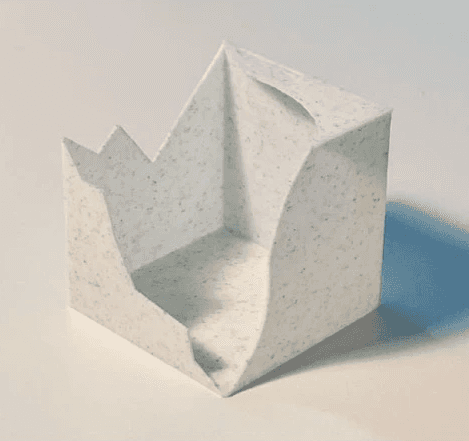
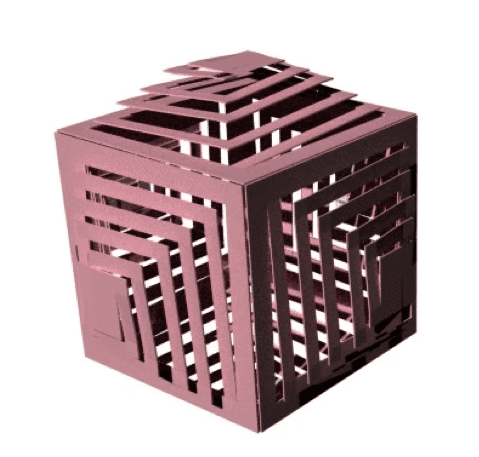
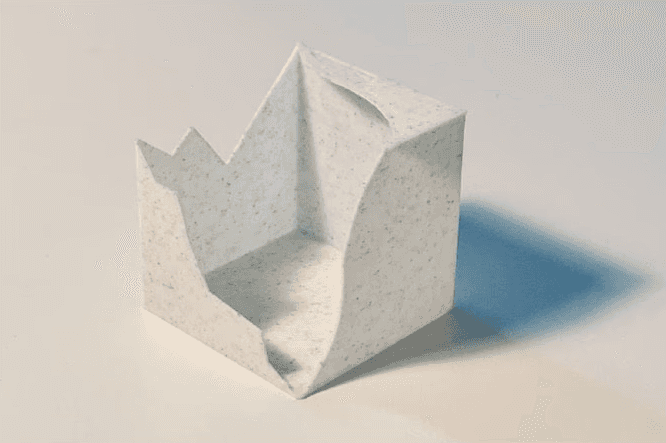
Chaorder — a conjunction of Chaos and Order — was my personal contribution to the collective model. As a logical and methodical person, my emotions were better defined through concepts than typical emotional states. The Chaos Theory demonstrates how tiny differences can produce vastly different outcomes, yet large-scale differences may converge to the same result.
Chaorder appears in three-dimensional form as two separate paths that diverge very early, yet arrive at the same point — without having shared any identical challenges or experiences along the way. Showing how greatly varying ways of navigating life may end at the same destination, if it was destined to be. Represented in amethyst.
The Concept Workshop — Six Emotions, Six Colors
Individual Conceptual Models
Color & Sensory Perception
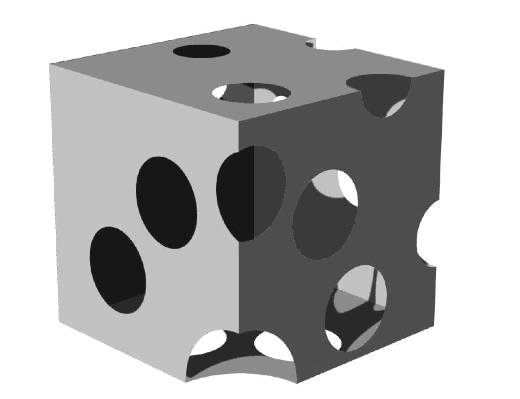
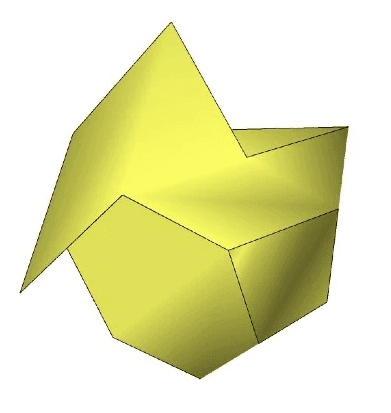
Each group member chose an emotion and a color, then crafted an individual conceptual model translating the abstract feeling into a three-dimensional physical form. These six models became the building blocks of the collective installation.

Integration — Six into One
Assembly Logic
Combining the Models
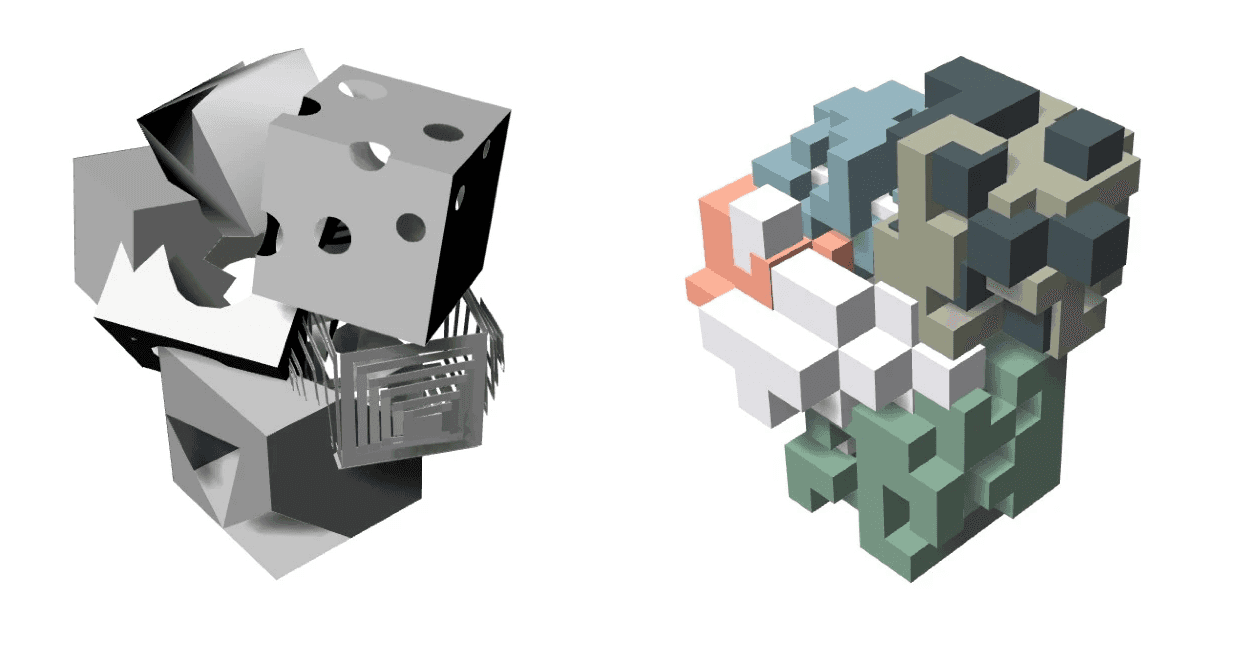
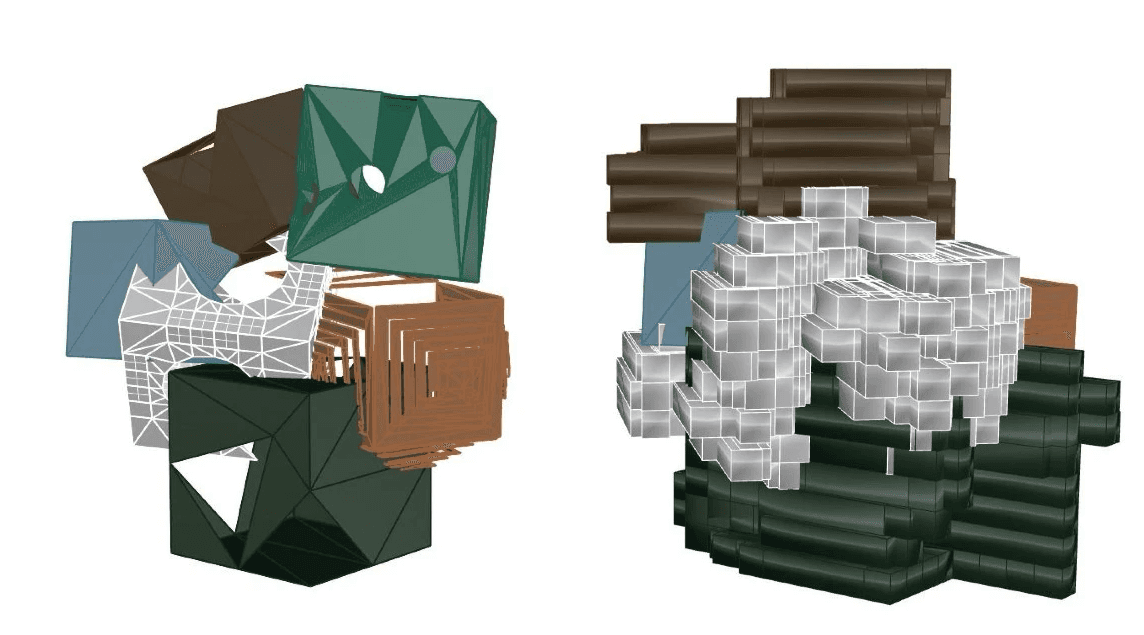
The integration of six distinct emotional models into a single coherent form was the central design challenge of the project. Many approaches were tested before arriving at the final method — each attempt an exercise in reconciling varied ideas, forms, and fabrication constraints within a shared assembly logic.
The six emotions were read as a linear narrative: Peace begins the story but doesn't stay. Hope and Passion catalyze its evolution. Chaorder defines the environment it moves through. Development happens, but doesn't bring the desired outcome — leaving Disappointment and Emptiness. The final form chose to present all six simultaneously rather than sequentially, through addition and voxelization of the cube-based modules.


Voxelization — Grasshopper Algorithm
Pufferfish · Grasshopper
From Form to Voxel
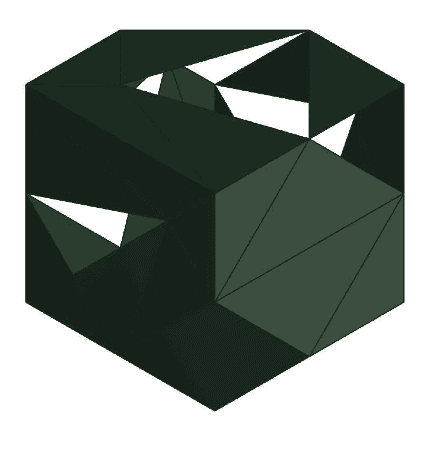
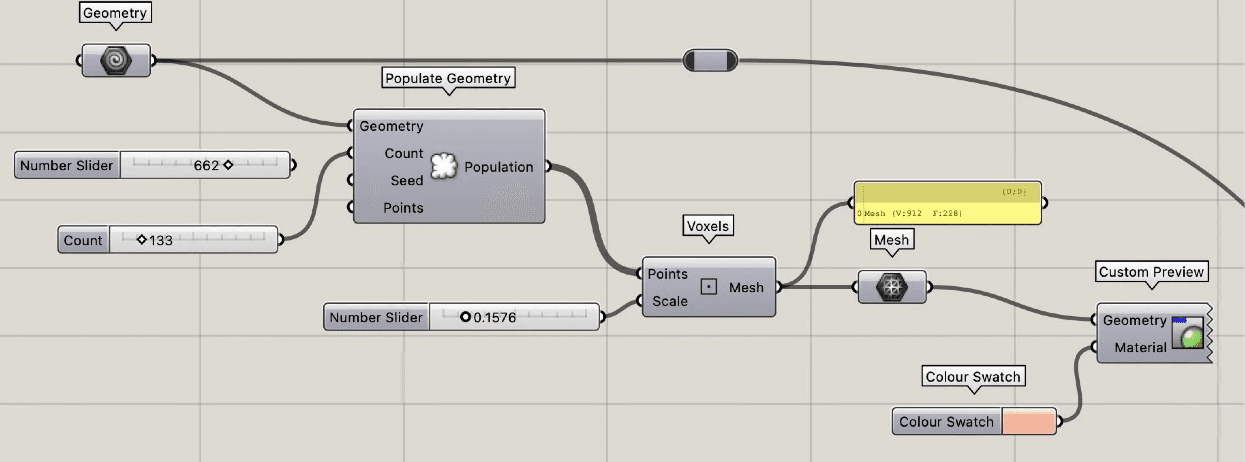
The voxelization pipeline began with an early experiment using the NGon plugin in Grasshopper — producing a model composed entirely of uniform cubes. While spatially coherent, it lacked the ability to control individual profile dimensions needed for physical fabrication.
The final algorithm used the Pufferfish plugin's Voxel Mesh component. Each module was divided into surfaces and division points — optimized in number and location — which served as base points for voxelization into a network of rectangular cuboids. Each module's cuboids were independently oriented and colored according to its corresponding emotion. The algorithm directly output the profile lengths and quantities sent to the manufacturer: 248 pieces at 10cm and 108 pieces at 15cm.
Final Installation — Topography of Senses
Lumion Render · Batuhan Ünlü · 2024
The Installation
The final voxelized model translates six individually folded-sheet conceptual models into a unified three-dimensional network — each module retaining its emotional identity through color while contributing to a shared volumetric form that could not have been designed by any single person alone.
The Lumion visualization places the completed installation in a domestic interior at object scale — grounding the abstract emotional concepts in an inhabitable, tangible reality. The reflective aluminum surface catches light in a way that echoes the project's central tension: the interplay between what is present and what is absent, between chaos and order, between individual expression and collective form.

Method — Chaotic Order
From Feeling to Form
Chaotic Order
'Chaotic order' is the studio's name for translating a feeling into form. Each person names their current emotional state, draws it first in 2D, then lifts that trace into 3D, and finally supports it with colour — a sense topography built up in groups. The result is a paper-thin 3D print, a physical prototype of an emotion: order pulled out of chaos, and chaos held inside order.