Year
2024
Type
CFD Simulation
Environmental Analysis
Tools
Ansys Discovery
Student Edition
Course
Generative Design
Systems in Arch.
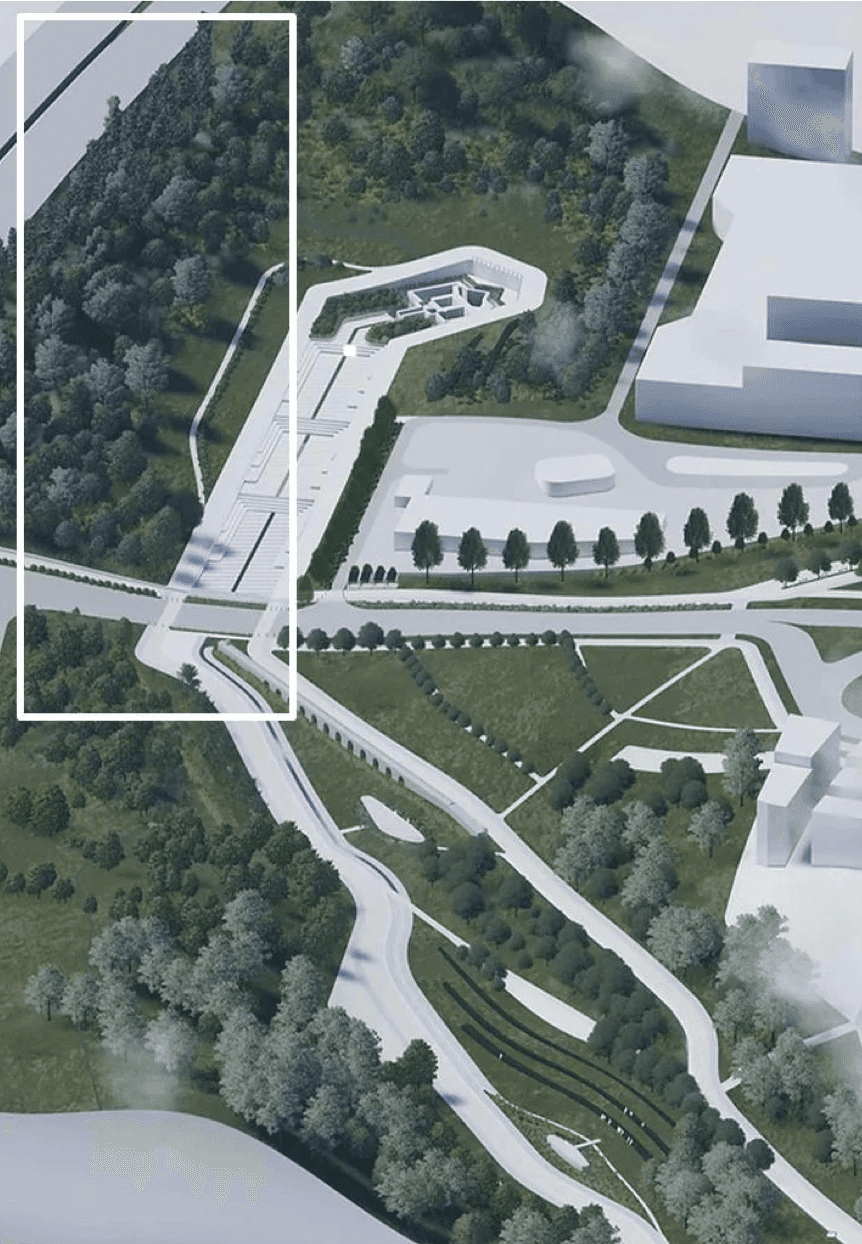
A computational fluid dynamics study investigating the role of vegetation in modulating airflow and improving air quality at Balıklı Square, Kırkçeşme Historic Park. The site presents a specific microclimatic challenge: the adjacent E80 Freeway, situated at a higher elevation than the park, generates polluted downwash gusts directed toward the public space below.
Three scenarios were modelled and compared in Ansys Discovery Student Edition — a baseline with no vegetation, a single row of trees, and a double row. Each tree was modelled at 5m radius, 10m height, and 2m canopy clearance from ground, approximating a mature specimen. The simplified geometry was chosen to accommodate the computational limits of a standard student laptop while preserving the essential aerodynamic behavior.
The study quantifies velocity reduction, pressure distribution, and particle dispersion patterns across all three configurations, producing evidence-based recommendations for vegetation placement as a wind barrier strategy in urban landscape design. It directly extends the design logic already embedded in the Kırkçeşme Historic Park project.
Screen Recording — Ansys Discovery
Live Simulation Walkthrough
The recording demonstrates the Ansys Discovery environment in real time — particle seeding, velocity vector fields, and pressure map transitions across all three scenarios. It captures the iterative CFD workflow: modifying geometry, re-running the solver, and reading output maps within a single session.
The Problem
Highway Wind & Topographic Downdraft
The E80 Freeway sits at a higher elevation than Kırkçeşme Historic Park, creating a topographic funnel that channels vehicle-generated polluted air directly into the public square below. This downwash effect was identified during the research and development phase of the original Kırkçeşme design as the primary environmental threat to visitor comfort.
Dense-foliage vegetation was incorporated into the park design as a physical barrier between the highway edge and the public area. This CFD study was created to scientifically validate that decision — testing whether the tree placement strategy meaningfully alters airflow velocity, particle dispersion, and pressure distribution at human scale.
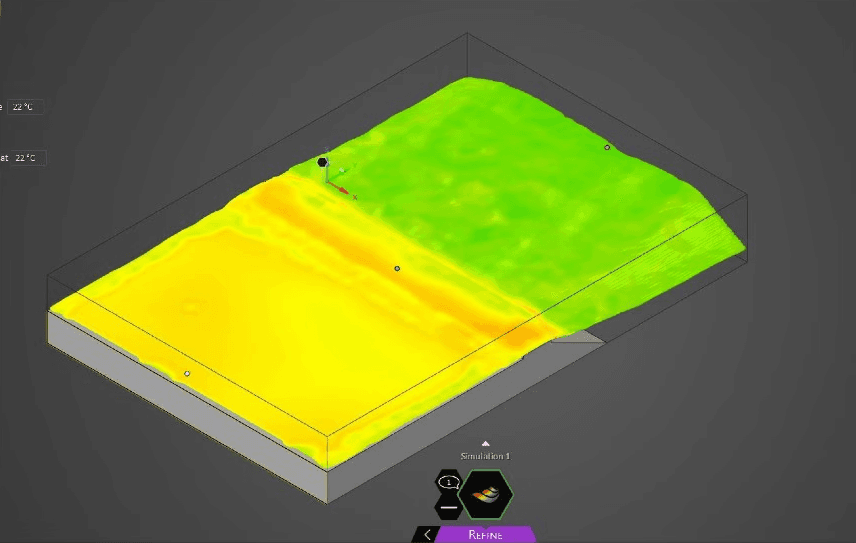

Baseline — Scenario 0
No Vegetation
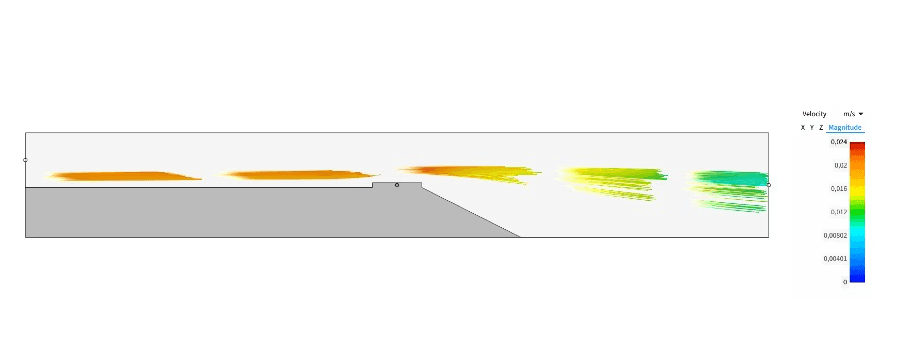
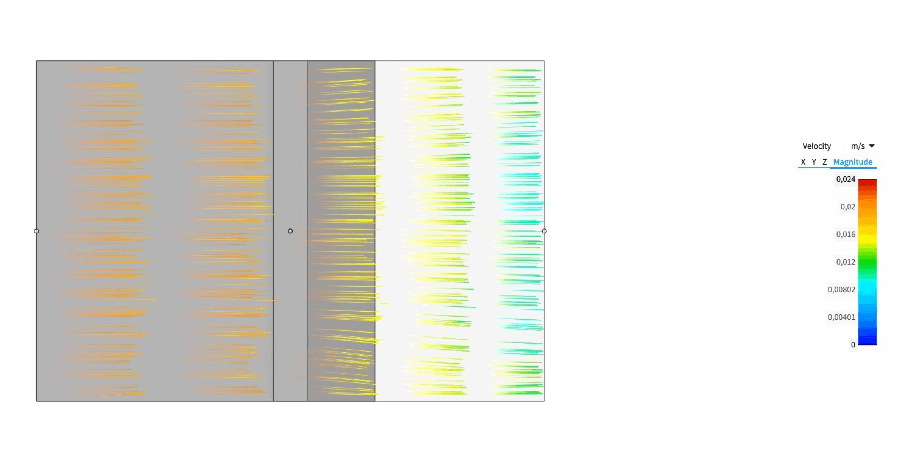
Without vegetation, airflow moves uniformly across the site with no significant obstruction. Particle dispersion follows the primary wind direction — spreading evenly from the E80 source across the square. The velocity heatmap shows consistently high wind speeds across the entire area, with no sheltered zones at human scale.
The topographic placement of the square in a lower valley creates a natural low-pressure zone, drawing in air from the highway above. This baseline establishes the worst-case condition: maximum wind exposure, no particulate capture, and no carbon sequestration contribution. All subsequent scenarios are measured against this reference state.
Scenario 1
Single Row of Trees
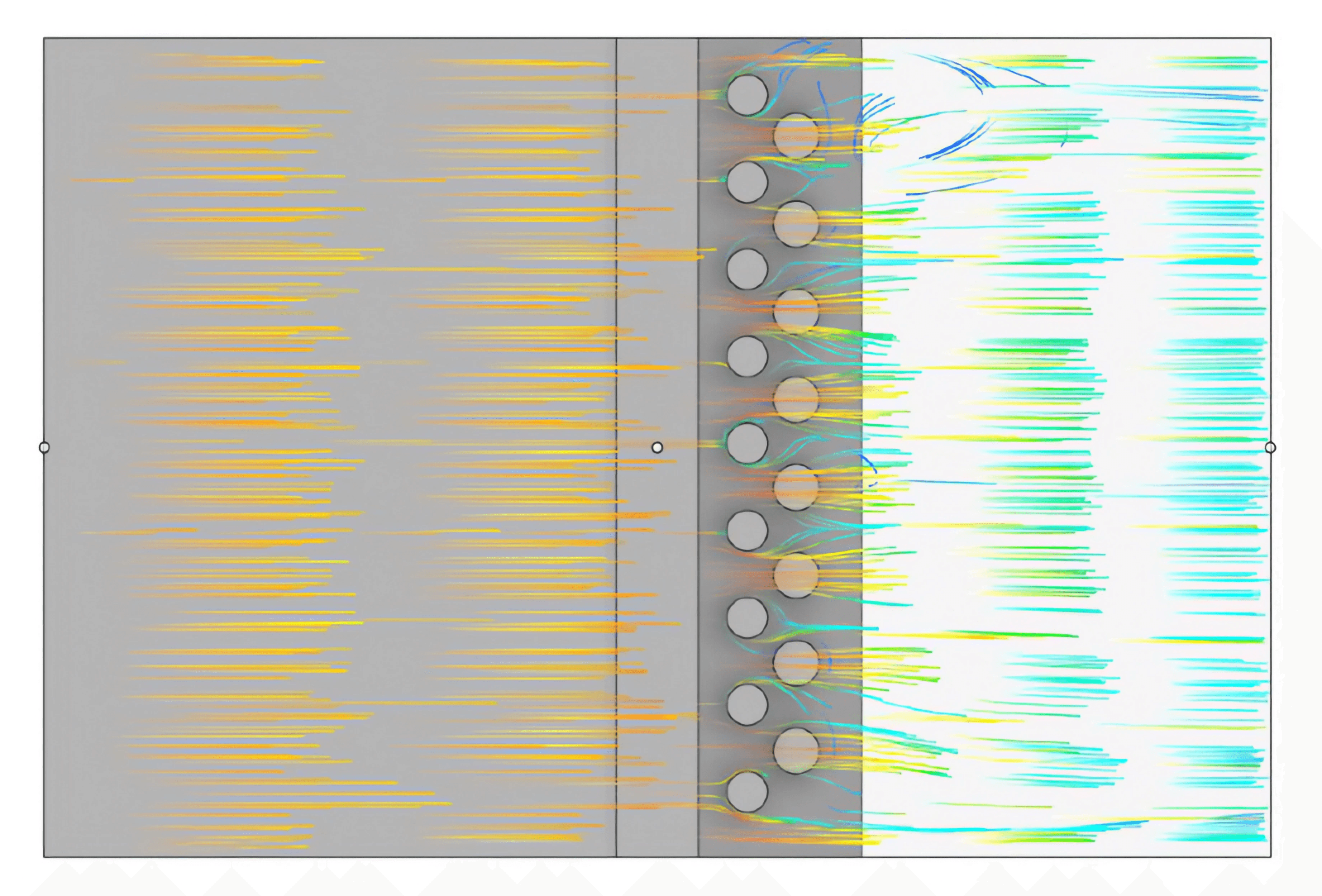
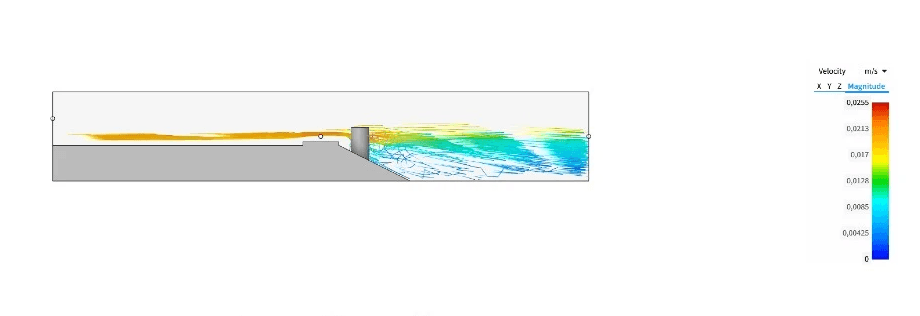
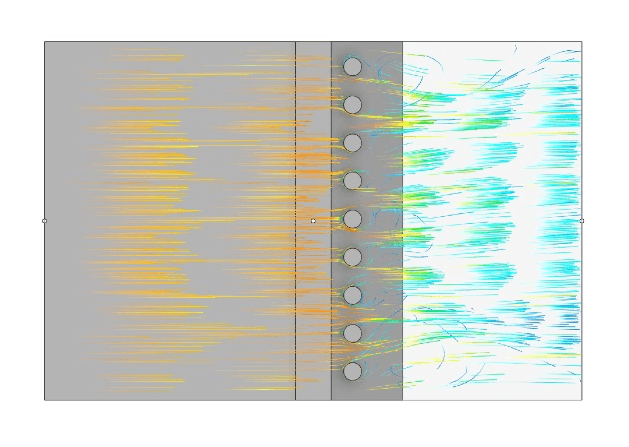
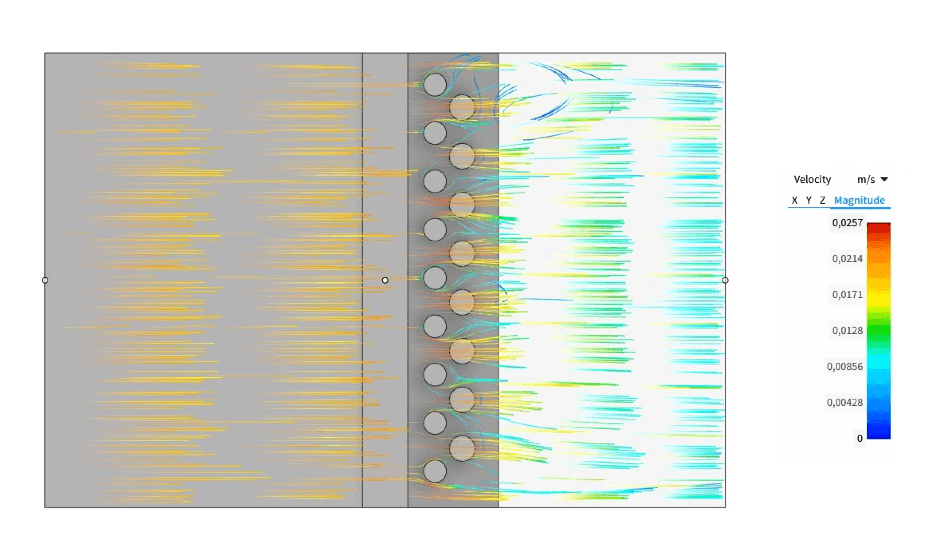
A single row of trees creates a clear windbreak effect — airflow speed immediately behind the barrier drops significantly. The side profile and plan view both show deflection and increased turbulence around each tree crown, which diversifies particle dispersion rather than allowing straight-line transmission across the square.
This configuration proved most effective for generating a human-scale comfort zone within the square. The trees additionally function as natural filters, trapping particulate matter and absorbing NOx and CO2. Of the two vegetated scenarios tested, the single row produced the most beneficial wind reduction profile — the initial break is the most impactful intervention.
Scenario 2
Double Row of Trees
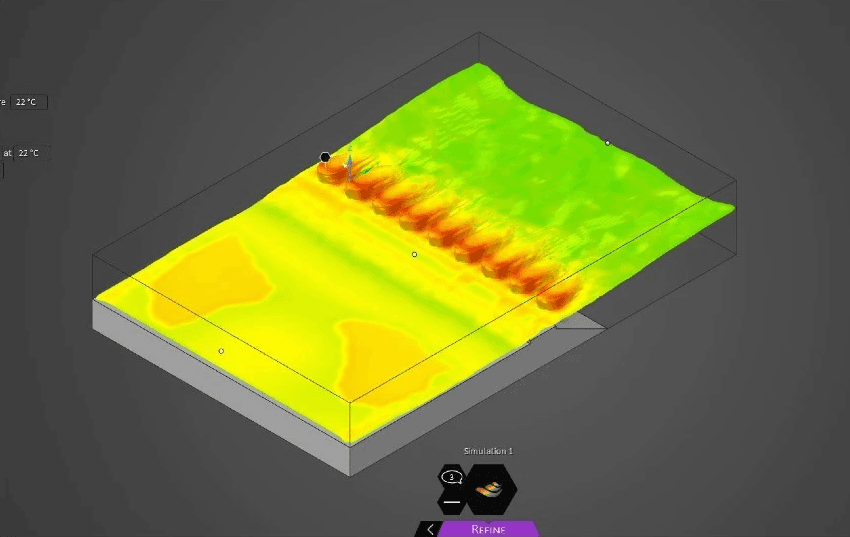
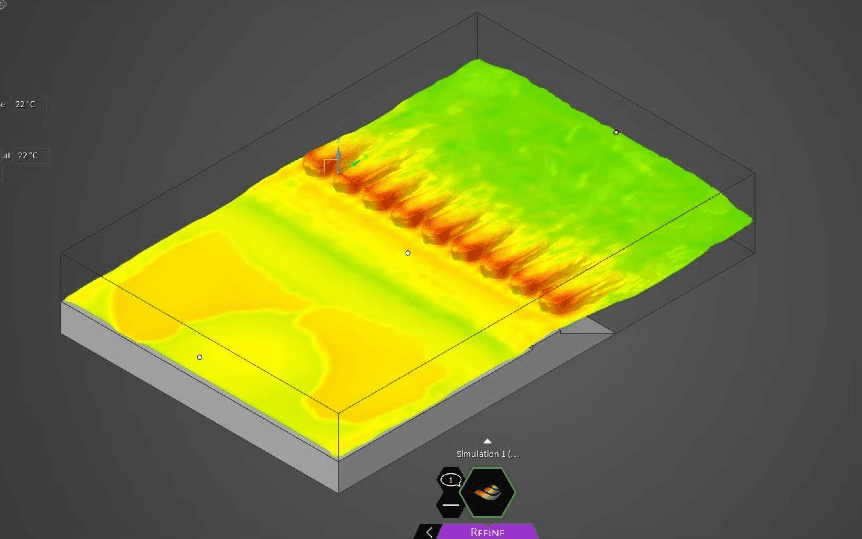
The double row creates a more pronounced physical barrier, reducing airflow behind both lines of trees. However, the simulation reveals an unintended consequence: turbulent air accelerated by the first row is channeled over the flat crown surface of the second row, creating elevated wind velocity at the upper edge of the square — a trade-off not visible in single-row conditions.
Despite this, the double row increases overall air purification capacity — more canopy surface means greater particulate capture and higher carbon sequestration. The configuration functions well as an environmental buffer at the perimeter, but requires careful positioning to avoid redirecting accelerated airflow toward occupied zones.
